

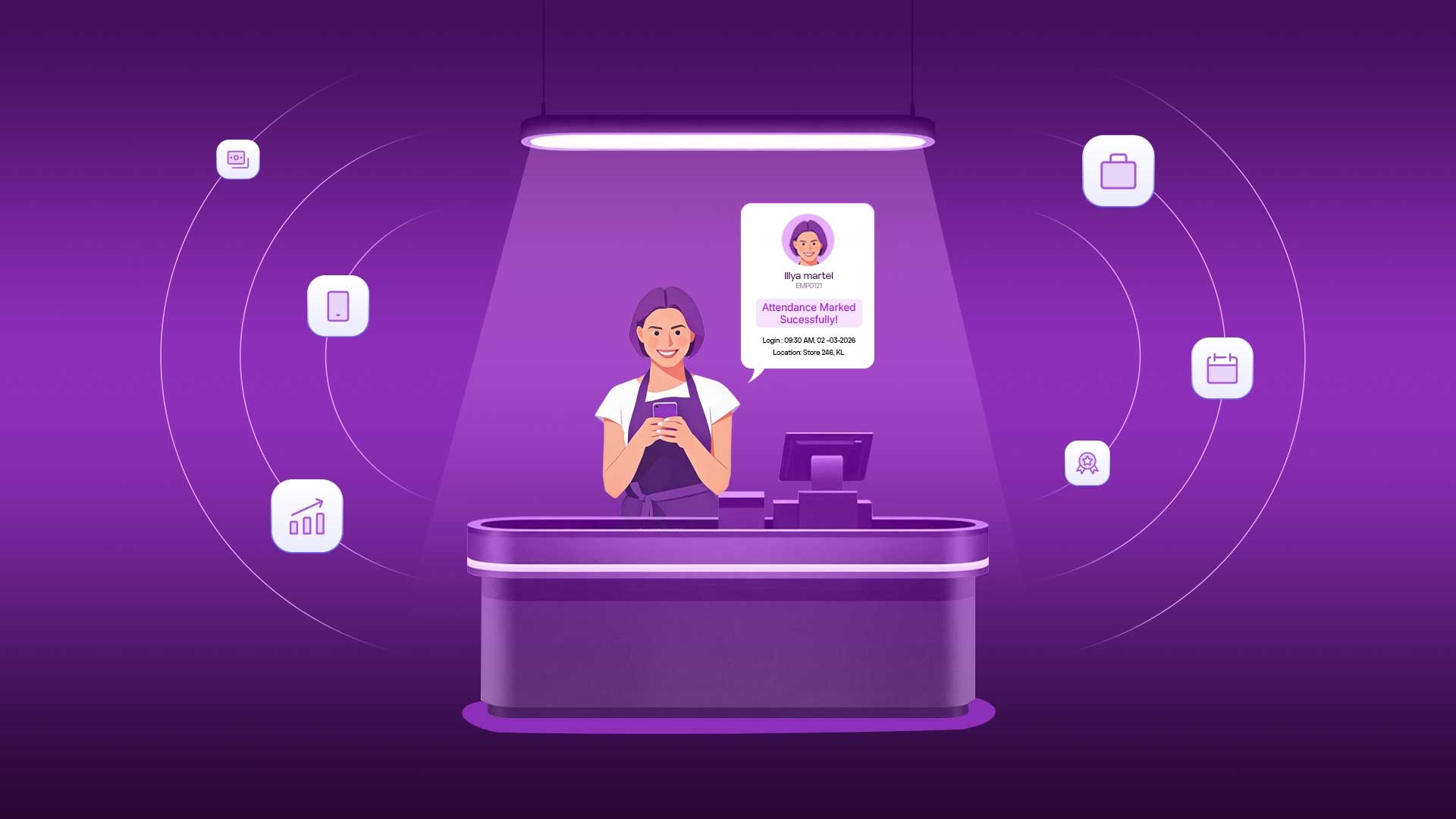
It’s 9 AM on the biggest sale day of the year, and one of your three cashiers at your busiest location just called in sick. Your store manager is urgently texting the regional HR coordinator, who’s checking datasheets to find available staff. By the time a replacement arrives, you’ve lost 2 hours of peak traffic sales and thousands in revenue.
Now imagine similar workforce gaps happening across your store network throughout the year: scheduling conflicts, last-minute absences, and compliance errors. These daily operational failures, multiplied across hundreds of locations, cost retail companies millions annually. This is why manual HR operations are no longer sustainable.
For CHROs in retail, this disconnect between operational execution and strategic workforce planning isn’t just an HR problem, it’s a business risk.
This blog explores the HR challenges facing the retail sector, why retail HR operations need urgent modernization, and how technology can transform retail workforce management from reactive to strategic.
Understanding Retail HR Operations
Retail HR operates in a uniquely complex environment. Unlike corporate setups dominated by desk-based roles, retail manages a frontline-first workforce spread across multiple shifts, locations, and job functions, from cashiers and stock handlers to store managers and regional leaders.
Large retailers hire thousands of employees annually just to maintain existing headcount. Recruitment is continuous, as employees move between roles, transfer locations, or exit the organization. This complexity intensifies in regions where varying labor laws, languages, and workplace norms add layers to multi-location HR management.
Seasonal demand creates further pressure. During festivals, holidays, and peak shopping periods, retailers may need to scale headcount rapidly within weeks, requiring fast, flexible hiring and workforce planning.
Most critically, thin retail margins mean HR inefficiencies directly affect profitability. A few extra labor hours per store, multiplied across hundreds of locations, results in major cost leakage. Understaffing, on the other hand, impacts customer experience and revenue.
Why Retail HR Operations Need Modernization
The gap between operational HR execution and strategic workforce planning in retail has never been wider. While other industries have embraced digital transformation, many retail organizations remain stuck in operational mode, reacting to workforce issues rather than anticipating them.
- Manual, time-heavy work: Scheduling, attendance, approvals, and payroll often rely on disconnected systems, consuming most of HR’s time.
- Scattered workforce data: Employee information sits across multiple tools, preventing a single, clear view of workforce performance.
- Limited store visibility: Turnover, absenteeism, and compliance risks are identified late due to lack of centralized oversight.
- Reactive decision-making: Hiring, training, and compliance actions happen after problems arise, not before.
- Weak strategic planning: Without real-time insights, forecasting growth and aligning workforce strategy with business goals becomes difficult.
Workforce Management Challenges in Retail Environments
Retail workforce management presents structural, operational, and compliance-related complexities that directly impact profitability and employee experience. From persistent turnover to inconsistent execution across stores, HR leaders must navigate multiple risks simultaneously.
- High employee turnover: According to industry benchmarks, annual turnover rates of over 50% are consistently reported across retail, particularly in frontline roles. Continuous hiring increases recruitment, onboarding, and training costs while reducing productivity during ramp-up periods.
- Compliance complexity: Operating across multiple regions requires adherence to varying labor laws, including minimum wage, overtime, working hour limits, and break policies. Misalignment with local regulations can result in penalties, lawsuits, audits, and reputational damage.
- Shift scheduling complexity: Creating schedules that align with employee availability, labor laws, skill mix requirements, and predicted foot traffic demands sophisticated planning. Manual scheduling consumes hours weekly per store manager and often results in coverage gaps, overtime costs, and employee dissatisfaction.
- Seasonal workforce management: Retail experiences recurring demand spikes during festivals, holidays, and sales events, often requiring 30-50% workforce increases within weeks. HR must forecast needs months ahead, execute rapid bulk hiring, complete compressed onboarding, and manage post-season workforce transitions. This often leads to mistimed hiring, overstaffing costs, understaffing losses, and inconsistent training quality across seasonal cohorts.
- Inconsistent store-level execution: HR policies and programs often get implemented unevenly across locations. Variations in onboarding quality, performance management rigor, and employee engagement practices create fairness concerns and weaken employer brand consistency across regions.
From Shop Floor Execution to Strategic Workforce Planning
The shift from operational execution to strategic workforce planning starts with automating administrative work. Digitizing attendance tracking, leave management, payroll processing, and compliance reduces manual effort and frees HR teams from daily firefighting, creating space for strategic initiatives.
This automation only delivers value when paired with centralized workforce data. Real-time visibility into attendance, performance, engagement, skills, and labor costs allows CHROs to identify turnover risks early, address compliance gaps proactively, and evaluate which HR efforts drive measurable business impact.
With data centralized, the next step is bringing structure to retail’s most chaotic process: scheduling. Intelligent tools factor in labor laws, employee preferences, demand forecasts, and budgets to generate optimized schedules quickly, improving both operational efficiency and employee experience.
Together, these capabilities enable data-driven workforce planning that shifts HR from reactive staffing fixes to proactive talent strategy. By aligning historical trends with business forecasts, CHROs can anticipate hiring needs, close skill gaps, and ensure workforce capacity supports growth.
Benefits of Modernized Retail HR Operations
Modernized retail HR operations transform workforce management from reactive administration to proactive, data-driven leadership. By integrating real-time visibility, automation, and standardized workflows, retail CHROs gain stronger control over labor costs, employee performance, and multi-store consistency.
|
Benefit |
Description |
| Improved workforce
visibility |
|
| Reduced labor
cost leakage |
|
| Improved scheduling
accuracy |
|
| Faster hiring
cycles |
|
| Stronger employee
retention |
|
| Consistent policy
enforcement |
|
Modernizing Retail HR Operations with Akrivia HCM
Modernizing retail HR operations requires a connected approach to retail workforce management across stores, regions, and frontline teams.
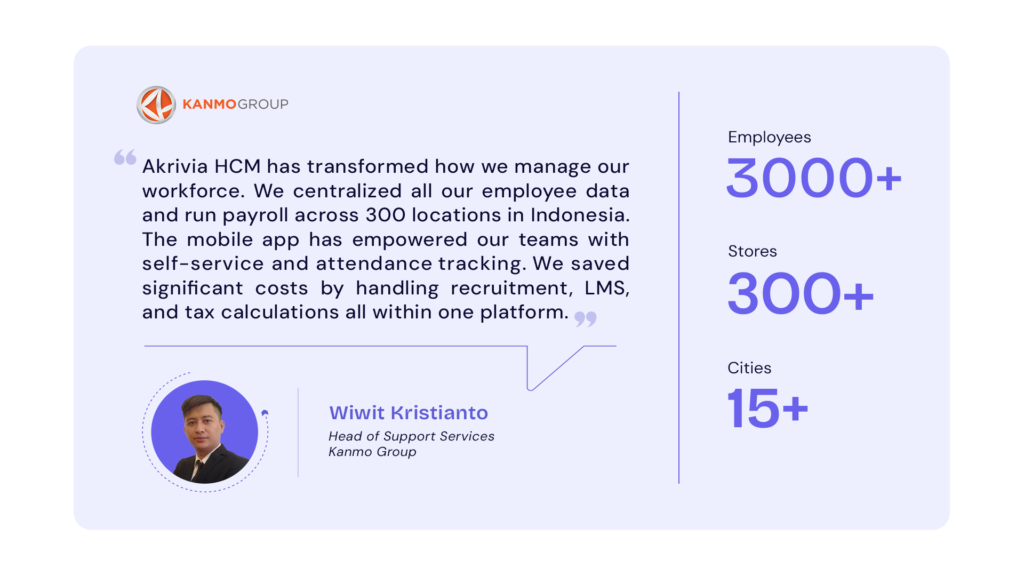
Akrivia HCM enables retail HR transformation by providing a centralized platform that strengthens workforce visibility, improves coordination, and supports strategic workforce planning in retail environments.
- Centralized workforce management across locations: A unified system enables multi-location workforce management with real-time visibility into staffing, attendance, and workforce distribution across stores.
- HR automation in retail: Automation reduces manual administrative workload by streamlining attendance tracking, leave management, and policy enforcement within retail HR operations.
- Shift scheduling and attendance management: Structured shift scheduling in retail environments improves schedule accuracy, reduces absenteeism impact, and strengthens frontline workforce management.
- Workforce planning and compliance monitoring: Data-driven workforce planning in retail aligns staffing levels with business demand while ensuring compliance consistency across locations.
Check out more: What are Rotating Shifts and How to Use them
Conclusion
As retail organizations scale, retail HR operations must evolve from store-level coordination to strategic workforce leadership. Modernizing HR operations in retail allows CHROs to gain workforce visibility, reduce operational inefficiencies, and align workforce planning with business growth.
By strengthening retail workforce management through automation, centralized data, and structured planning, organizations move from reactive HR execution to proactive workforce strategy. Retail’s next competitive edge won’t come from the shop floor alone, it’ll come from the leaders who turn workforce data into strategy.
FAQs
How can retail reduce labor costs without cutting headcount?
Optimize scheduling to match actual demand, eliminate unauthorized overtime through automated tracking, and reduce turnover costs by improving retention. These operational improvements often deliver 5-10% labor cost savings.
What ROI can I expect from retail HR modernization?
Most retailers see ROI within 6-12 months through labor cost savings, reduced compliance penalties, faster hiring, and improved retention. The exact ROI varies by organization size and current operational efficiency.
What role does data play in retail workforce planning?
Workforce data helps HR leaders forecast staffing needs, monitor attendance patterns, and optimize labor allocation across locations.
How can HR standardization improve multi-store operations?
Standardized HR processes ensure consistent scheduling, attendance tracking, and workforce policies across all retail locations.