

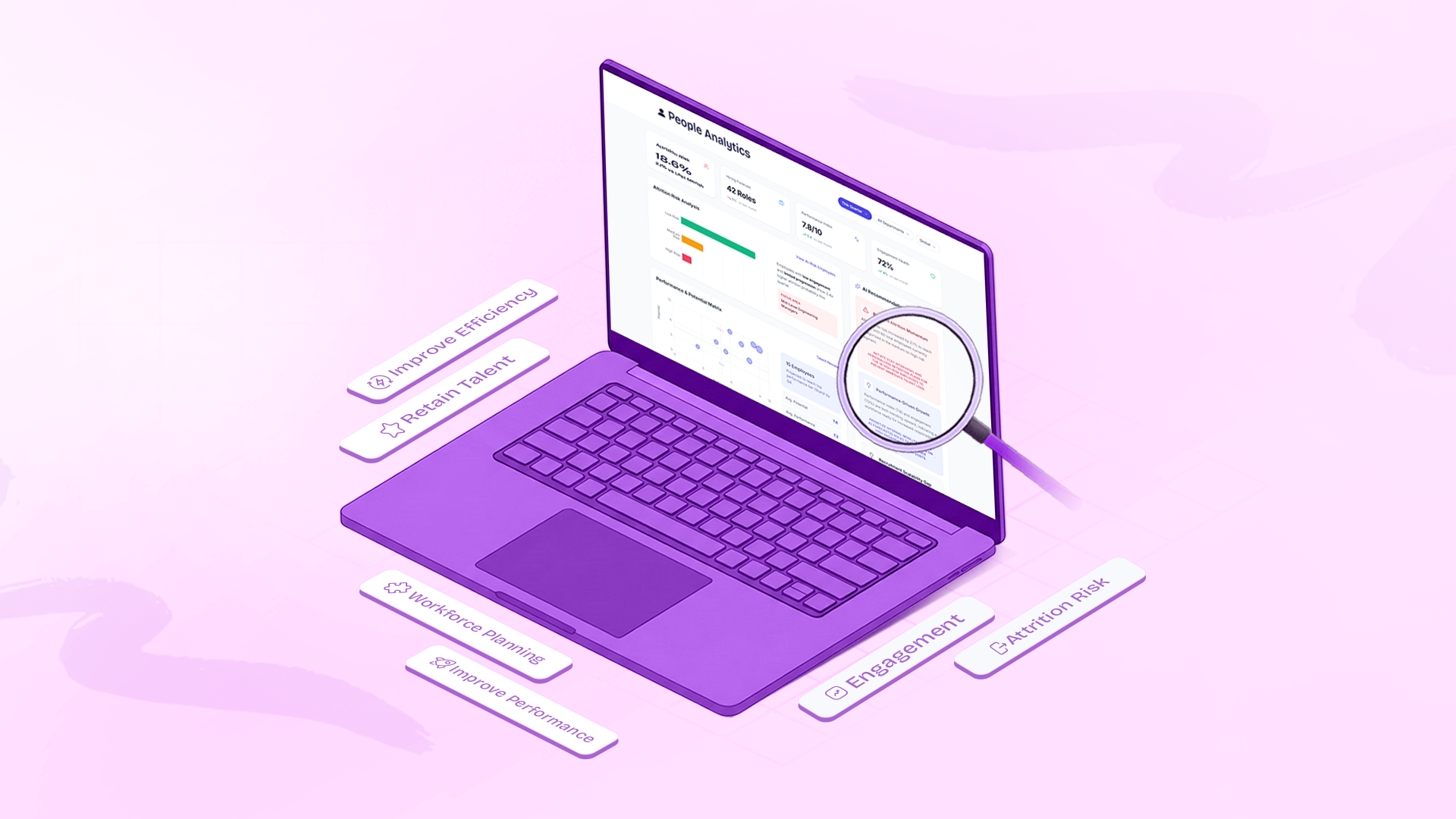
Human Resources is no longer limited to maintaining records or reporting historical workforce data. Organizations today expect HR teams to anticipate challenges, reduce people-related risks, and support business growth with data-backed decisions.
Across industries, HR analytics trends show a clear move from descriptive dashboards to forward-looking insights. As businesses scale and workforce complexity increases, workforce analytics provides the structure needed to connect employee data with strategic planning. Predictive models help HR teams move from intuition-driven decisions to evidence-based workforce strategies.
Predictive people analytics is not about replacing human judgment. It is about strengthening HR’s role as a strategic partner by using data responsibly to forecast outcomes, prioritise actions, and deliver measurable business value
What Are Predictive People Analytics in HR
Predictive people analytics refers to the use of historical and real-time workforce data to forecast future HR outcomes such as attrition, hiring success, and employee performance. Within the broader predictive analytics in the HR landscape, it applies statistical models and machine learning techniques to identify patterns that are not visible through manual analysis alone.
Predictive approaches extend this by estimating what is likely to happen based on past trends. For example, analysing attendance, performance ratings, and engagement data together can help forecast exit risk or productivity decline.
AI-powered models process large volumes of structured and unstructured data, enabling HR teams to generate forecasts faster and with greater consistency. However, predictive people analytics remains a decision-support tool. The value lies in how HR interprets insights and aligns them with organisational context and policy.
How HR Teams Forecast Employee Attrition
Employee attrition prediction helps HR teams proactively identify turnover risks and protect critical talent. By analysing workforce data patterns, HR can distinguish between normal attrition and high-impact exits, enabling targeted, timely retention actions instead of reactive hiring.
|
Attrition Forecasting Focus Area |
Description |
| Tenure & Career Stage Signals |
|
| Performance & Productivity Trends |
|
| Internal Mobility & Role Changes |
|
| Manager & Team Dynamics |
|
| Engagement & Sentiment Scores |
|
| Role, Team & Location Risk Forecasting |
|
| Targeted Retention Interventions |
|
Checkout Employee Recognition: Types of Recognition That Drive Performance
Using Predictive Analytics to Improve Hiring Decisions
Hiring decisions have long-term implications for cost, productivity, and culture. Predictive hiring analytics supports HR teams by forecasting workforce demand and identifying future skill gaps before they affect delivery timelines.
- By applying workforce planning analytics, organizations can align hiring plans with business growth, seasonal demand, or transformation initiatives.
- Predictive models analyze historical hiring cycles, attrition patterns, and productivity metrics to estimate how many roles will be required and when.
- Another critical application is predicting the quality of hire. By linking candidate data with post-hire performance and retention outcomes, HR teams can refine selection criteria and reduce time-to-productivity.
- Predictive insights also help reduce offer drop-offs and hiring costs by identifying bottlenecks in the recruitment funnel and improving candidate targeting.
Predicting Employee Performance and Potential
Performance management is evolving beyond annual reviews. Performance analytics enables HR teams to continuously assess how employees contribute and where support is needed.
- Predictive models combine performance ratings, learning data, skill assessments, and behavioral indicators to forecast future outcomes.
- Through advanced talent analytics, organizations can identify patterns that distinguish consistent performers from those at risk of decline. This helps managers intervene early with training, mentoring, or role adjustments rather than waiting for performance issues to surface.
- Predictive people analytics also plays a role in identifying high-potential employees. By analysing career progression, learning agility, and performance consistency, HR teams can build stronger succession pipelines.
Importantly, data-backed insights support fairer decisions by reducing over-reliance on subjective assessments.
Business Benefits of Predictive People Analytics
When implemented effectively, predictive people analytics delivers measurable organisational value across retention, planning, and strategic decision-making.
- Reduced attrition & improved retention: One of the most visible HR analytics benefits is reduced attrition and improved retention outcomes. Early intervention lowers replacement costs and preserves institutional knowledge.
- Improved workforce planning & ROI: From a planning perspective, predictive insights improve workforce analytics ROI by enabling better capacity planning and budget allocation. HR teams can forecast staffing needs accurately and avoid last-minute hiring or overstaffing scenarios.
- Stronger strategic HR alignment: At a strategic level, strategic HR analytics strengthens alignment between people strategy and business goals. Leadership gains confidence in HR recommendations when supported by data-driven forecasts rather than historical summaries alone, positioning HR as a proactive contributor to organisational performance.
Key Challenges and What HR Teams Must Watch Out For
Predictive people analytics offers strong strategic value, but it is not without risks. Data limitations, bias, and ethical considerations can directly impact decision quality and employee trust.
- Data quality issues: Incomplete, outdated, or inconsistent data can weaken model accuracy and result in misleading insights, reducing the reliability of predictive outcomes.
- Bias in HR analytics: Predictive models may unintentionally reinforce existing biases if historical data reflects unequal or unfair practices. Regular audits and variable reviews are essential to maintain fairness and inclusion.
- Ethical use of AI in HR: Ethical AI in HR requires transparency, employee consent, and responsible data usage. Employees must clearly understand how data is used and how predictions influence decisions.
- Over-reliance on AI insights: Predictive insights should not replace human judgment. HR teams must balance AI-driven recommendations with contextual understanding, organisational values, and ethical decision-making.
Conclusion: Moving HR from Insight to Action
Predictive people analytics allow HR to forecast attrition, hiring outcomes, and performance trends, shifting HR from historical reporting to forward-looking, strategic intervention. It equips future-ready HR teams to anticipate talent risks and opportunities rather than reacting after outcomes occur.
By embedding predictive insights into workforce planning, talent strategies, and decision workflows, HR can enable timely actions that directly impact retention, productivity, and hiring effectiveness. Clear governance, responsible data use, and strong data foundations ensure predictions translate into sustained organisational value amid evolving talent markets and skill demands.
FAQs
Is predictive people analytics suitable for mid-sized organizations?
Yes. With scalable HR platforms and cloud-based tools, predictive people analytics is increasingly accessible to mid-sized organizations seeking data-driven HR decisions.
How much historical data is required for predictive HR analytics?
Typically, 12–24 months of clean and consistent workforce data is sufficient to build reliable predictive models.
Can predictive people analytics work with existing HRMS platforms?
Most modern predictive analytics tools integrate seamlessly with existing HRMS, ATS, and performance management systems.
How often should predictive HR models be reviewed or updated?
Models should be reviewed quarterly or bi-annually to account for organisational changes, workforce trends, and business priorities.
What are the 4 types of HR analytics?
The four types of HR analytics are descriptive analytics (what happened), diagnostic analytics (why it happened), predictive analytics (what is likely to happen), and prescriptive analytics (what actions should be taken).