

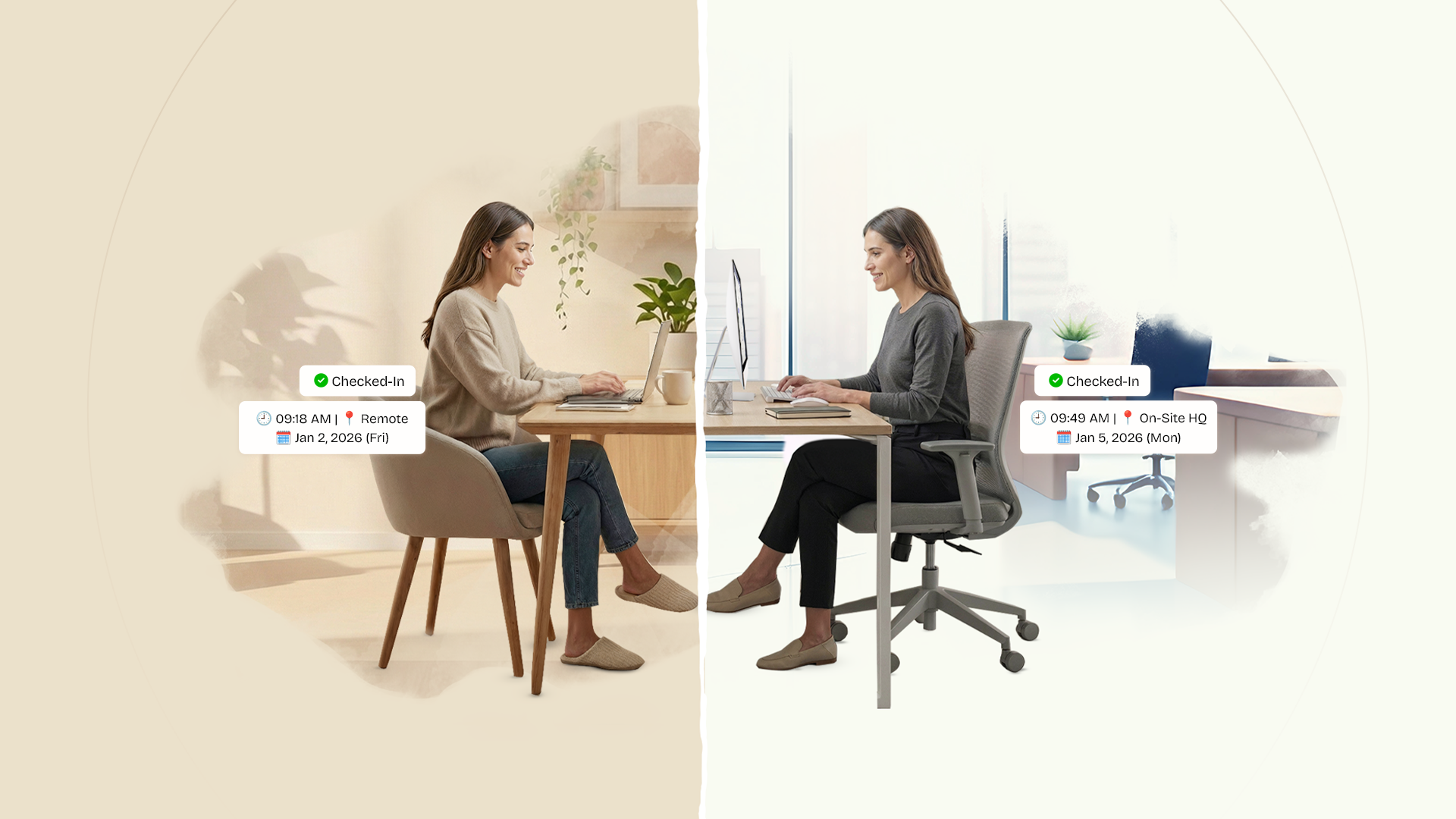
Hybrid and flexible work models have moved from temporary solutions to permanent workforce strategies. Today, most organizations operate within some form of hybrid structure, combining remote and in-office work to balance productivity, flexibility, and collaboration.
Employees increasingly prefer flexible work arrangements, while businesses seek sustainable models that support performance, engagement, and long-term growth.
In this landscape, the winners will be the organizations that treat hybrid work models not as a temporary perk but as a core operating system. That operating system must be enabled by integrated HR tech, intelligent analytics, and workforce collaboration tools that make distributed work measurable, fair, and scalable
The Shift from Traditional Work to Hybrid Models
For decades, work revolved around centralized offices and fixed schedules. That model has steadily given way to modern work models that prioritize flexibility, autonomy, and outcomes.
Advances in digital workplace transformation and collaboration technology accelerated this shift, making remote and hybrid workforce structures both feasible and scalable.
Organizations now recognize that productivity is no longer tied to physical presence. Instead, hybrid work models enable employees to perform at their best while maintaining stronger work–life balance. This shift reflects a broader transformation in how work is structured, measured, and managed.
Understanding Hybrid Work Models
Hybrid work models blend remote and in-office work, allowing employees to choose their working environment based on role requirements, collaboration needs, and productivity preferences. These flexible work models provide structure without rigidity, enabling organizations to adapt to diverse workforce expectations.
Common types of hybrid work models
Hybrid work models vary based on how much flexibility organisations allow and how central the office remains to daily operations.
| Hybrid Work Model | Description |
| Office-centric hybrid work |
|
| Flexible or “at-will” hybrid model |
|
| Remote-first hybrid model |
|
| Office-first hybrid model |
|
Technology as the Foundation for Hybrid Work
Hybrid work cannot scale without a strong technology backbone. Managing a remote and hybrid workforce using disconnected tools leads to inefficiencies, blind spots, and compliance risks.
- Hybrid work technology encompasses more than communication platforms. It includes integrated HR systems, workforce analytics, attendance and leave management, performance tracking, engagement tools, and AI-driven insights. Together, these systems enable consistent execution of flexible work models.
- AI in hybrid work adds an additional layer of intelligence. Automated scheduling, workload analysis, performance insights, and predictive alerts help HR teams manage complexity without manual intervention.
Digital workplace transformation ensures that data flows seamlessly across systems, creating a single source of truth for workforce decisions.
Impact of Hybrid Work on Productivity and Performance
Hybrid work models have reshaped how organisations assess productivity and employee performance. Instead of tracking hours worked, HR teams now rely on outcome-based metrics supported by integrated HR analytics and AI-driven insights.
- Productivity measurement moves away from hours worked toward results, deliverables, and goal alignment with business outcomes.
- Integrated HR analytics enables organisations to evaluate hybrid work productivity across different roles, teams, and geographies.
- Data-driven insights reveal patterns between flexible work arrangements, employee engagement levels, and performance outcomes.
- AI in hybrid work identifies early signs of burnout, disengagement, or workload imbalance before performance drops.
- Predictive analytics allow HR teams to intervene early, ensuring flexibility does not translate into long-term productivity decline.
Checkout 10 Ways HR Tech can Improve Employee Engagement
Managing Culture, Collaboration, and Engagement in Hybrid Teams
Culture remains a critical success factor in modern work models, even when teams are distributed. In hybrid environments, culture must be intentionally designed and reinforced through digital channels.
- HR technology enables continuous engagement through pulse surveys, feedback mechanisms, recognition platforms, and communication tools. These systems provide real-time visibility into employee sentiment across the remote and hybrid workforce.
- Effective hybrid team management relies on equipping managers with the right tools and insights. Workforce collaboration tools, combined with structured check-ins and clear goal alignment, ensure that employees feel connected, supported, and fairly treated regardless of location.
Challenges in Implementing Hybrid & Flexible Work Models
While hybrid and flexible work models offer clear advantages, execution brings structural and operational risks. Gaps in technology, policy alignment, and compliance visibility can weaken employee trust and organisational control.
- Fragmented workforce tools: Disconnected HR, collaboration, and productivity tools limit visibility into workforce activity, making it difficult to manage performance, engagement, and availability holistically.
- Policy inconsistency & inequity: Without centralised policy management, flexible work rules may be applied unevenly across teams, leading to confusion, perceived bias, and reduced employee satisfaction.
- Data-blind return-to-office decisions: RTO strategies not supported by workforce data often create resistance, reduce trust, and negatively impact morale and retention.
- Compliance & regulatory complexity: Hybrid and remote work across regions increases exposure to labour law, payroll, tax, and statutory compliance risks without integrated hybrid work technology.
- Increased risk of errors & disputes: Manual processes and siloed systems heighten the chances of payroll errors, compliance lapses, employee disputes, and reputational damage.
The Future of Hybrid & Flexible Work Models
The future of work will be defined by adaptability rather than uniformity. Organisations will design hybrid work models tailored to roles, industries, and talent segments.
AI in hybrid work will play a central role in workforce planning, skills forecasting, and capacity management. Intelligent systems will recommend optimal work models based on performance data, collaboration needs, and employee preferences.
Hybrid workplace strategy will evolve from static policies to dynamic frameworks supported by continuous data inputs. Organisations that invest in hybrid work technology today will be better positioned to navigate future workforce shifts with confidence.
Find out the 11 Different Types of Shift Schedules for Your Team
Conclusion: Turning Hybrid Work into a Strategic Advantage
Hybrid and flexible work models represent a fundamental shift in how organisations design work. When supported by the right HR technology, these models move beyond convenience to become drivers of productivity, engagement, and resilience.
AkriviaHCM enables HR teams to manage flexible work arrangements with structure, fairness, and measurable outcomes. By combining workforce analytics, AI-driven insights, and collaboration tools, organisations can sustain hybrid work productivity while supporting employee flexibility.
The future of work belongs to organisations that treat hybrid work as a strategic operating model rather than a temporary compromise. With a strong digital foundation, clear governance, and intelligent systems, hybrid work can become a lasting competitive advantage in the modern workforce.
FAQs
How does HR technology support hybrid work models?
HR technology enables hybrid work by managing attendance, performance, engagement, and compliance through centralized HCM platforms.
Why is an HCM platform essential for managing hybrid work?
An HCM platform ensures consistency, visibility, and data-driven decision-making across remote and in-office employees.
How does AI improve hybrid workforce management?
AI helps predict workforce trends, identify burnout risks, optimize schedules, and provide actionable insights for HR decision-making.
Why is a unified HR tech stack critical for hybrid work success?
A unified HR tech stack eliminates data silos, ensures consistent employee experiences, and enables scalable hybrid workforce management.
Do hybrid work models work for small and mid-sized companies?
Yes, hybrid work models are scalable and can be implemented by small and mid-sized organizations with the right digital tools.